
October 13, 2026

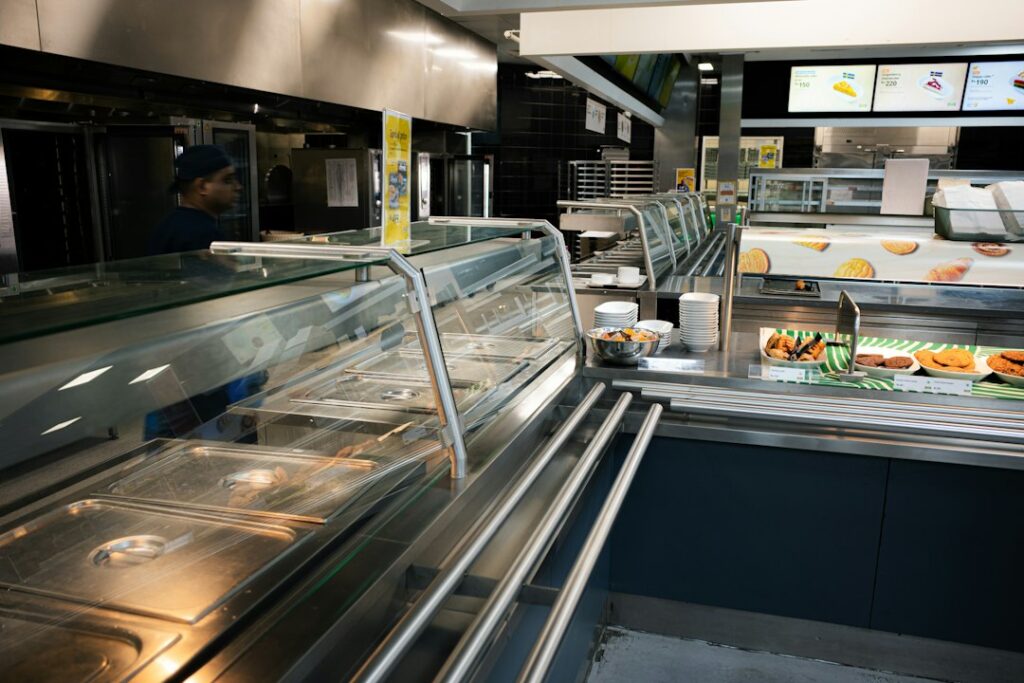
A cafeteria serving line with stainless steel counters and food displays
Coffee

Coffee Shop Layout Ideas That Flow

A customer walks in, pauses behind two people studying the menu, and then discovers the pickup shelf blocks the only route to the tables. I see this in early coffee shop plans all the time: the room looks attractive on paper, but people and equipment compete for the same few feet. Useful coffee shop layout ideas begin with movement. Mark the entrance, ordering point, payment area, pickup zone, seating, restrooms, and exit on a simple floor plan. Then trace the paths of a first-time customer, a barista carrying drinks, and a supplier bringing in a delivery. The first technical concept to check is adjacency, meaning which functions need to sit close together. The register should be near the menu and the start of the queue, while the espresso machine, grinder, refrigerator, and sink should support a short barista route. Pickup belongs after the drink-making area, not beside the entrance. A pastry case can sit near ordering if it helps customers decide, but it should not narrow the queue. For example, moving a pastry case 18 inches can create a clearer line without changing the room’s capacity or adding construction cost. Queue design deserves more attention than most owners give it. A queue is not just a line; it is a waiting system with a direction, a width, and a place where customers make decisions. Use a visible starting point and keep the line from cutting across the pickup path. If a shop serves mobile orders, provide a distinct shelf or counter section so those customers do not join the ordering line unnecessarily. In a narrow corner location, a single serpentine queue may work better than two informal lines, provided the menu remains visible from the waiting area. The bar itself needs an ergonomic layout. Ergonomics means arranging tools and surfaces around the worker’s repeated movements, reducing unnecessary reaching, turning, and bending. Place frequently used items within easy reach, but leave enough landing space for cups and finished drinks. A barista may need to move from grinding to brewing, steaming, rinsing, and handing off several times during a rush. Watch the door swings of under-counter refrigerators and dishwashers. A beautiful counter becomes a daily nuisance when an open appliance door traps someone in the busiest work zone. Seating should match the way people actually use the shop, not just fill every empty corner. A two-person table can serve a quick visit, while a few larger shared surfaces may suit laptop users or small meetings. Leave a comfortable passage between chair backs and the main route, and avoid placing seats where customers waiting for drinks will stand behind them. A realistic example is a small neighborhood shop with twelve seats: six flexible two-person tables may support more varied visits than one long bench that looks efficient but is difficult to share. Lighting, acoustics, and sightlines affect whether the layout feels usable. Keep the ordering counter easy to locate from the entrance, and make the pickup area visually distinct without turning it into a crowded display. Pendant lights can define seating zones, while softer materials may reduce the clatter of cups and chairs. Sightlines also help staff notice a full condiment station, a customer needing assistance, or a spill. These details are operational tools, not just decoration. coffee business guidance can be useful when connecting design choices with everyday management. Before committing to construction, test the plan at full scale with painter’s tape or cardboard. Walk the route while carrying a tray, open every cabinet, pull out chairs, and have one person act as a customer ordering while another prepares drinks. Check accessibility, fire exits, plumbing needs, electrical outlets, and local requirements with the appropriate professionals rather than guessing from a sketch. Review the layout during a busy imagined period, not only when the room is empty. The strongest plan is usually the one that makes ordinary work feel uneventful, clear, and repeatable.


The West Bollsta semi-submersible drilling rig docked in a harbor at low light
Construction and Design

Drilling Contractors Perth Guide

Choosing drilling contractors in Perth is an engineering decision, not simply a matter of hiring a machine. Imagine a house extension with a proposed footing beside an existing wall, narrow access and uncertain ground below. The contractor must understand the drawings, inspect the route, consider nearby structures and select equipment that can work without avoidable disruption. Auger, foundation and rock drilling suit different conditions, so a tidy site and a quick quotation are not enough on their own. The sensible test is whether the proposed method matches the ground, the design, the access limitations and the wider construction sequence. Auger drilling is often a practical starting point for bored holes through soil, clay or weathered material. An auger uses a rotating flight to cut and lift spoil from the hole, much like a large open screw. Its suitability still depends on diameter, depth, stability and the material encountered below ground. In a hypothetical residential project, a compact rig may be appropriate because the machine must pass through a narrow side access. A larger commercial foundation could instead require greater reach and torque. The decision involves balancing the design requirements with working space, spoil removal and likely changes in ground conditions. Steel liners and casings matter when the sides of a drilled hole may not remain stable. A casing is a temporary or permanent sleeve that supports the opening while work continues, reducing the risk of loose material collapsing into it. Concrete liners can provide a durable internal surface where the finished shaft requires one. These components should not be treated as last-minute additions. Their diameter, length and installation sequence need to suit reinforcement and concrete placement. If that relationship is overlooked, the result may be delays, difficult spoil handling or a shaft that no longer matches the engineer’s design. Rock drilling requires a different approach from ordinary augering. Solid rock can slow progress, increase tool wear and transmit vibration, particularly near older buildings or sensitive services. Consider a hypothetical retaining wall where shallow soil gives way to hard limestone. Forcing a standard auger through the obstruction may be less efficient than selecting equipment intended for rock and planning how spoil will be removed. The method should also account for access, vibration tolerance and observations made as drilling proceeds. For project-specific information, drilling contractors perth can be assessed against those practical requirements. Foundation work includes details that are easily missed when the initial brief focuses only on holes. Pole erection may require accurate drilling and controlled positioning, while a ragbolt cage is an assembled group of anchor bolts used to connect a base plate or structure to its concrete foundation. It must be held in the correct position before the pour, since errors can affect installation above ground. Strengthening and modification work can be more demanding still, because existing concrete, reinforcement and restricted access limit the available methods. A contractor should therefore understand the complete sequence rather than treat every hole as an isolated task. Dewatering deserves attention before drilling begins, especially where groundwater or accumulated surface water may enter an excavation. It involves controlling or removing water so drilling and concrete placement remain workable. Water can soften excavation sides, carry spoil into unwanted areas or affect freshly placed concrete if it is poorly managed. The appropriate response depends on the source and volume of water, site layout and environmental constraints. Questions about pumps, discharge, containment and monitoring belong in the pre-start discussion. Treating water as an unexpected nuisance often creates more disruption than planning a suitable response alongside the drilling method. A useful brief for drilling contractors in Perth should be specific about known requirements while admitting what remains uncertain. Provide drawings, hole sizes, estimated depths, access limits, nearby structures and available ground information. Ask how equipment will reach the work area, where spoil will go and what may change if rock, unstable material or groundwater appears. Confirm how casings, concrete liners, pole work or ragbolt cages fit the programme. The contractor’s method statement and clarification of assumptions are more useful than a confident promise made before the ground has been tested. Further foundation drilling information can help frame those early questions.

brown wooden shelf with bottles
Food

Best Lower East Side Bars to Try

You have just finished dinner on Orchard Street, and the first question is usually the same: where can you get a good drink without crossing half of Manhattan? When comparing the best bars lower east side options, I see people make the same mistake all the time. They search only by cocktail photos, then discover a crowded room, a long wait, or a menu that does not suit the group. A better approach is to decide what the evening needs first: a quiet table, a serious cocktail, a casual beer, food after 10 p.m., or a place that can handle an unplanned extra guest. The Lower East Side rewards a short walking radius. Orchard, Ludlow, Rivington, Stanton, and nearby streets offer very different moods within a few blocks, but that convenience can make people overpack their plans. One realistic example is a couple starting with dinner and wanting one drink afterward. They are usually happier choosing a bar close to the meal than chasing a supposedly famous room across the neighborhood. Another is a group meeting after work, when easy directions and enough standing space matter more than an elaborate list of ingredients. Location is part of the bar decision, not a detail added later. Read the menu for structure rather than for impressive wording. An aperitif is a lighter, often bittersweet drink intended to open the appetite, while a digestif is traditionally served after eating and may be richer or more spirit-forward. ABV means alcohol by volume, so it gives a rough sense of strength, though a small high-proof drink can still contain less liquid than a large one. These terms help you order with fewer surprises. If one person wants something refreshing and another wants a slow sipper, a balanced menu should make both choices clear without forcing everyone into the same style. Cocktail technique also affects the experience. Stirring chills and dilutes a drink gently while keeping it clear and silky; shaking adds more aeration and creates a colder, cloudier texture. Dilution simply means water introduced through ice or mixing, and it is part of the recipe rather than a flaw. A bar that explains these differences is easier to navigate, especially for guests who do not usually order cocktails. I see first-time visitors hesitate over unfamiliar spirits when a simple question would solve it: Do you prefer bitter, sweet, tart, smoky, or spirit-forward? Good service turns those preferences into practical choices. Timing deserves as much attention as the drink list. Early evening can be easier for an unplanned visit, while later hours may bring louder rooms and fewer open seats. If you are arranging a birthday, date, or small work gathering, confirm whether the venue takes reservations, limits table time, or expects the whole party before seating. Those policies vary, so do not assume that a bar can convert every seat into a group table. For a food-led stop, best bars lower east side searches may also surface places suited to brunch, dinner, and cocktails, which can simplify a mixed itinerary. Food changes what makes a bar useful. A short snack menu may be enough for a first drink, but a group arriving hungry needs something more substantial and available at the hour they plan to visit. Check whether the menu leans toward shareable plates, full entrees, or small bites before promising the venue to everyone. Coffee can matter too when the night extends into a nonalcoholic finish. For a meal-centered option with cocktails, an australian restaurant and cocktails setting may suit guests who want more than bar snacks without splitting the evening across several addresses. The most reliable choice is rarely the place with the loudest reputation. It is the room that matches the occasion, budget, noise tolerance, and appetite of the people actually going. Look at the current menu, check the day and time, and call ahead when the group is large or the plan matters. Leave room for a change of course: a packed bar may be enjoyable for one drink but poor for conversation, while a calmer restaurant bar may work better for a long catch-up. That small amount of planning keeps a Lower East Side night flexible without making it feel overmanaged.

text
IT

Sign Language Interpreters Strengthen Hospital Communication

A preoperative appointment can lose its purpose when a patient and clinician cannot communicate directly. A relative may try to interpret, but the patient might avoid sensitive questions, miss a medication instruction, or agree without understanding a surgical risk. Hospitals need a dependable process for arranging qualified sign language interpretation, not an improvised solution at the reception desk. Direct communication gives the patient a fuller role in decisions and lets the care team hear the patient’s concerns without filtering through a companion. It also gives the clinician a clearer opportunity to explain what will happen before, during, and after treatment. An interpreter conveys meaning between languages as people communicate, while a translator generally works with written material. That distinction matters in clinical encounters, where timing, tone, and a patient’s response can affect the next question. American Sign Language has its own grammar and structure; it is not a word for word form of English. Patients may use ASL, another signed language, speechreading, spoken communication, writing, or a combination. The scheduler should ask about the patient’s preference instead of assuming that a hearing aid, written note, or family member will provide adequate access. A request for a sign language interpreter for hospitals should record that preference clearly. The interpreter communicates what each person says and signs, but does not diagnose, recommend treatment, or replace the clinician’s explanation. That boundary is especially important during informed consent. The clinician must explain the procedure, expected benefits, material risks, alternatives, and likely next steps in language the patient can understand. The interpreter conveys the explanation and the patient’s questions without deciding what information matters. Staff should face the patient, speak in their normal voice, and pause after a complete thought rather than addressing the interpreter as if the interpreter were the patient. Short pauses also prevent staff from moving ahead while the patient is still responding. Hospitals usually select onsite or video remote interpreting according to the encounter. An onsite interpreter may fit a lengthy surgical consultation, a physical examination, a family meeting, or a conversation involving strong emotions. Everyone can share the same visual field, and the interpreter can observe who is speaking. Video access can be practical for triage or an unexpected short interaction when waiting for travel would delay care. The device still needs a stable connection, sufficient battery, a clear camera view, and a position that lets the patient see both the interpreter and the clinician. A small screen placed behind the clinician can force the patient to turn repeatedly and miss facial information or demonstrations. Scheduling staff can improve the encounter by sending useful preparation details ahead of time. The request might identify the department, appointment type, planned procedure, expected length, and whether several clinicians will attend. It can also note whether the visit includes consent, discharge teaching, medication instructions, or a specialist consultation. The service may need terminology related to surgery, oncology, obstetrics, or another field, so vague descriptions such as “follow-up” may not provide enough context. Staff should share only information needed for the assignment and follow the hospital’s privacy procedures. Confirming the appointment time, room, and communication preference the day before can prevent a patient from arriving while the interpreter is still being arranged. In an emergency department, speed and access may take priority. A patient with severe abdominal pain could use video interpretation during triage, provided the tablet is positioned where the patient can see it while answering questions and viewing relevant images or instructions. If the evaluation leads to a detailed surgical discussion, the team may request onsite coverage for the next meeting. Nurses should check that the interpreter can hear every speaker, especially near monitors and curtains, and should identify each person before asking questions. If a clinician leaves and another joins, a brief introduction helps the patient know who is making each statement. Confidentiality is one reason hospitals should not depend on relatives or unprepared companions for sensitive discussions. A family member may be helpful for emotional support, but may unintentionally soften a diagnosis, leave out a question, or answer on the patient’s behalf. A qualified interpreter is expected to preserve the content of the exchange and maintain appropriate boundaries. After explaining instructions, staff can ask the patient to show or describe how they will follow them, such as when a medication will be taken or which warning sign requires a call. A nod alone does not establish understanding. For hospital interpreter booking help, staff should provide the same encounter details used to select the communication method. A practical hospital workflow gives every department one clear request route and records the patient’s preferred communication method in the appropriate scheduling or clinical system. Before the appointment starts, someone should test the video connection, check screen visibility, gather the consent form, and allow time for introductions. During the visit, staff can identify speakers, limit side conversations, and pause before changing topics. Afterward, they can record operational notes such as whether the room layout worked, whether the visit needed extra time, or whether the device failed, without adding unnecessary details about the patient’s diagnosis. Those small records help the next scheduler prepare the right setting instead of repeating the same avoidable problems.

Scroll to Top