
The first technical concept to check is adjacency, meaning which functions need to sit close together. The register should be near the menu and the start of the queue, while the espresso machine, grinder, refrigerator, and sink should support a short barista route. Pickup belongs after the drink-making area, not beside the entrance. A pastry case can sit near ordering if it helps customers decide, but it should not narrow the queue. For example, moving a pastry case 18 inches can create a clearer line without changing the room’s capacity or adding construction cost.
Queue design deserves more attention than most owners give it. A queue is not just a line; it is a waiting system with a direction, a width, and a place where customers make decisions. Use a visible starting point and keep the line from cutting across the pickup path. If a shop serves mobile orders, provide a distinct shelf or counter section so those customers do not join the ordering line unnecessarily. In a narrow corner location, a single serpentine queue may work better than two informal lines, provided the menu remains visible from the waiting area.
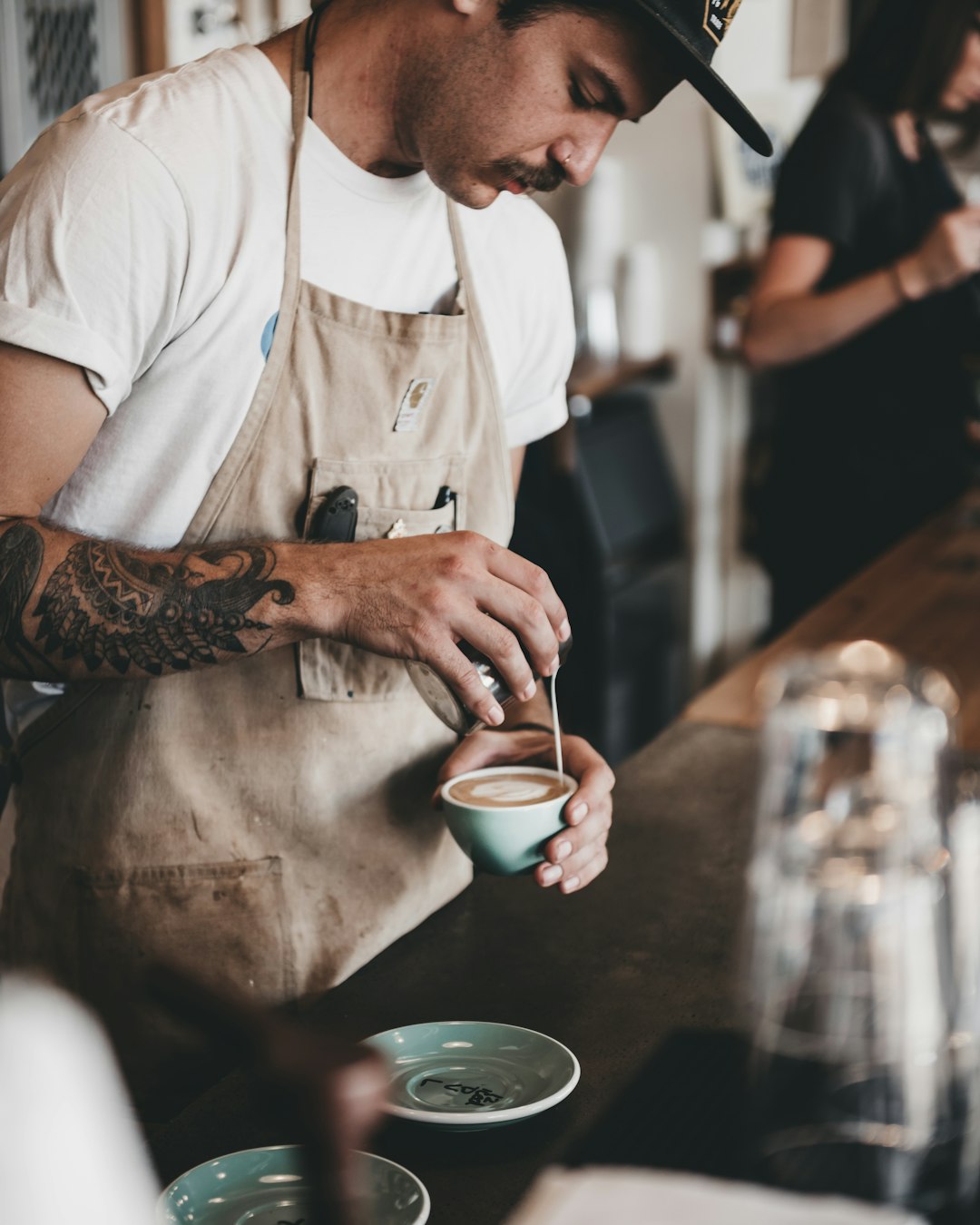
The bar itself needs an ergonomic layout. Ergonomics means arranging tools and surfaces around the worker’s repeated movements, reducing unnecessary reaching, turning, and bending. Place frequently used items within easy reach, but leave enough landing space for cups and finished drinks. A barista may need to move from grinding to brewing, steaming, rinsing, and handing off several times during a rush. Watch the door swings of under-counter refrigerators and dishwashers. A beautiful counter becomes a daily nuisance when an open appliance door traps someone in the busiest work zone.
Seating should match the way people actually use the shop, not just fill every empty corner. A two-person table can serve a quick visit, while a few larger shared surfaces may suit laptop users or small meetings. Leave a comfortable passage between chair backs and the main route, and avoid placing seats where customers waiting for drinks will stand behind them. A realistic example is a small neighborhood shop with twelve seats: six flexible two-person tables may support more varied visits than one long bench that looks efficient but is difficult to share.
Lighting, acoustics, and sightlines affect whether the layout feels usable. Keep the ordering counter easy to locate from the entrance, and make the pickup area visually distinct without turning it into a crowded display. Pendant lights can define seating zones, while softer materials may reduce the clatter of cups and chairs. Sightlines also help staff notice a full condiment station, a customer needing assistance, or a spill. These details are operational tools, not just decoration. coffee business guidance can be useful when connecting design choices with everyday management.
Before committing to construction, test the plan at full scale with painter’s tape or cardboard. Walk the route while carrying a tray, open every cabinet, pull out chairs, and have one person act as a customer ordering while another prepares drinks. Check accessibility, fire exits, plumbing needs, electrical outlets, and local requirements with the appropriate professionals rather than guessing from a sketch. Review the layout during a busy imagined period, not only when the room is empty. The strongest plan is usually the one that makes ordinary work feel uneventful, clear, and repeatable.